
When renewing, the old passport must be returned to the administration. This regulatory framework, often misunderstood by counter agents, does not formally prohibit keeping one’s old passport in France. It organizes a return, followed in some cases by the return of the invalidated document to the holder.
Mandatory return does not mean destruction of the passport
Confusion is common, even among municipal and consular agents. The regulations require the return of the old passport when collecting the new document. The administration retrieves the document, invalidates it (by perforation, cutting a corner, or stamping it as canceled), and may then return it to its holder.
This two-step mechanism is key. The return to the administration is a legal obligation. The return of the invalidated passport to the applicant is a discretionary action, subject to an explicit request made at the time of collection.
A testimony published on the Services Publics + platform illustrates the issue: a user at the Copenhagen consulate was denied the retention of his old passport. The agent claimed that the return was “mandatory for 20 years.” However, during a previous renewal, a more experienced agent had returned the document to him after canceling it.
The question of whether one can keep their old passport in France largely depends on the proper application of the text by the agent in charge of the collection.

Invalidated passport: technical conditions for retention
The passport belongs to the French state, not to its holder. This legal principle underpins the obligation of return. The state remains the owner of the document even after its validity has expired.
For the return to the holder to be possible, the passport must be physically invalidated in an irreversible manner. Three methods are practiced:
- Perforation that goes through the cover and inner pages, rendering the electronic chip unusable
- Cutting off a corner of the passport, the most common technique used in municipalities
- Stamping “CANCELED” on the personal data page, sometimes combined with perforation
Once invalidated by one of these methods, the document has no identity value. It cannot be used to cross a border or to prove identity to a third party. The fight against identity theft justifies this rigor: an expired but physically intact passport could serve as a basis for forgery.
Still valid visas on an old passport: the trap of early renewal
The most sensitive case concerns holders whose old passport contains still valid multiple-entry visas. A U.S. B1/B2 visa, a Chinese visa, or an Indian visa may have a validity period longer than that of the passport itself.
Many countries accept travel with two passports: the new (valid) one and the old (invalidated) one containing the current visa. This practice, common in the United States and several Asian countries, is not universal. Some consulates require the transfer of the visa to the new passport, for a fee and with delays.
The systematic return without handing over the invalidated document deprives users not only of memories but also of proof of entries and exits from the territory. This proof may be required in the context of a foreign nationality application or a family reunification file.
Practical recommendation for visas
Submitting a written request for retention, ideally before the collection appointment, strengthens the approach. Mentioning the presence of valid visas supports the legitimacy of the request. No text authorizes the agent to refuse the return of a properly invalidated passport if the holder requests it.
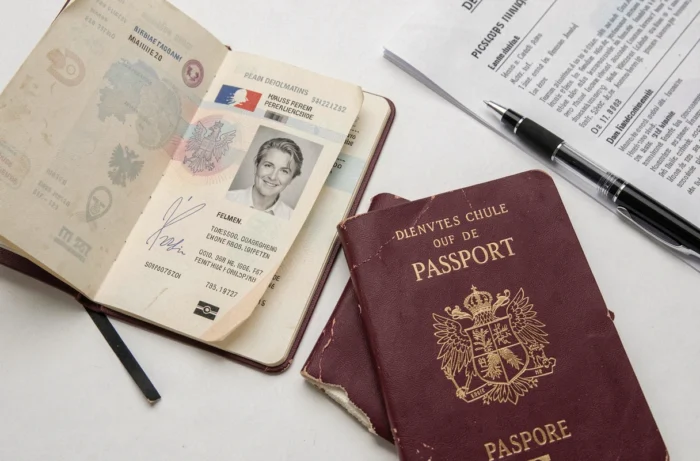
Administrative disputes and forced return: recent remedies
The Council of State issued a decision on August 10, 2026 (n°518520) that expands the usual legal framework. An applicant was no longer just contesting the non-return of their old passport but was requesting the judge to order either the return and update of their passport and national identity card or the issuance of provisional identity documents under penalty.
This contentious evolution goes beyond sentimental issues. In situations related to nationality disputes or the validity of documents, the problem is no longer about keeping a travel souvenir. It is about obtaining a usable document, even provisional, when the existing passport cannot be reactivated or returned.
When to approach the administrative judge
The appeal to the administrative tribunal is justified mainly in two cases:
- Refusal to issue a new passport when the old one has been withdrawn without replacement
- Refusal to return the invalidated passport despite an explicit request when the document contains necessary evidence for an ongoing procedure (naturalization, border dispute, proof of residence)
- Inability to obtain a provisional document during the duration of a dispute over nationality
The subject remains politically active. The Ministry of the Interior has not changed its doctrine, but parliamentary pressure and judicial appeals could lead to changes in practice.
The regulations have not been amended since their publication. The margin of maneuver remains with the counter agent, who applies or does not apply the option of returning the invalidated document. Formulating the request explicitly, in writing if possible, and mentioning the concrete reasons for retention (valid visas, proof of stay, ongoing administrative procedure) remains the most reliable method to recover one’s old passport.