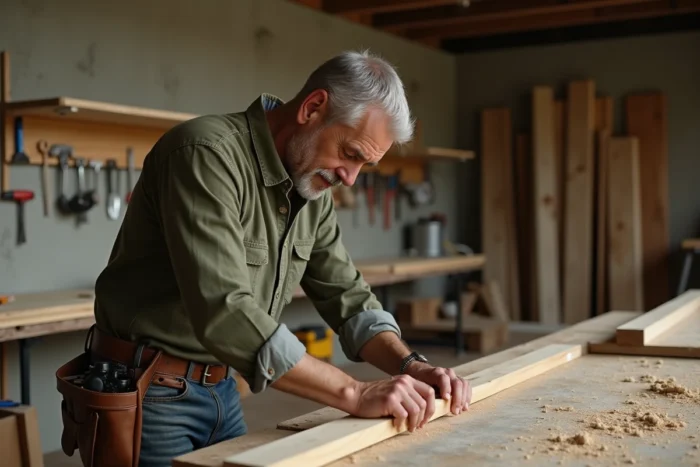
The DIY market in France is experiencing a decline for the third consecutive year. Sales of materials and equipment are falling, driven down by the housing crisis and economic uncertainties. DIY enthusiasts have not disappeared; they are adapting their home improvement projects and looking to minimize costly mistakes.
This context encourages a rethink of how we approach home DIY, from choosing tools to managing a project on-site.
Preparing a DIY project: what happens before the first drill bit
The majority of failures in home DIY do not stem from a lack of skill. They come from insufficient preparation. Before touching any tools, three steps deserve special attention.
The first concerns assessing the existing conditions. Measuring a wall, checking the level of a floor, identifying the paths of electrical conduits or pipes: these checks take about twenty minutes and prevent damage that costs hours to fix. A metal and live cable detector remains the only reliable way to know what is hidden behind a wall.
The second step, often overlooked, is the complete list of materials before any purchase. Buying as you go leads to multiple trips to the store, incompatible items, and delivery surcharges. Listing the exact quantities of screws, plugs, paint, or wood, with a margin for surplus, allows for uninterrupted work. Platforms like briconet.fr facilitate this phase of comparison and supply by grouping references by project type.
The third step is the timeline. Painting a wall requires drying time between coats. Applying silicone sealant needs several hours before it can be exposed to water. Planning these delays prevents rushing a finish out of impatience.
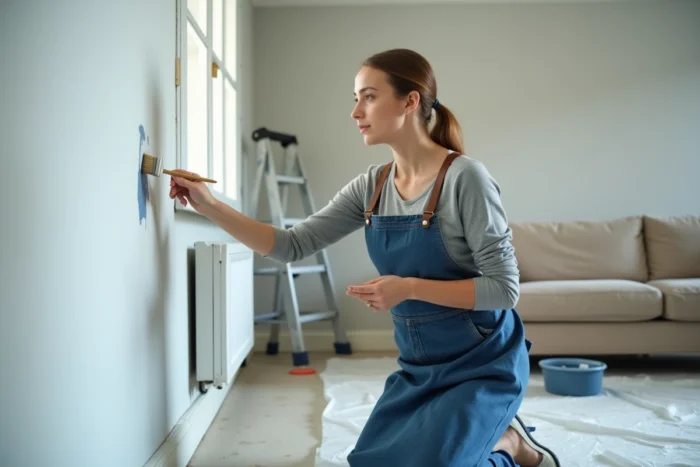
DIY tools: balancing versatility and specialization
The most shared DIY tips online often revolve around repurposing everyday objects (cooking oil on hinges, toilet paper to detect a leak). These tricks can help, but they mask a real issue: the choice of tools determines the quality of the result.
For a DIYer who tackles projects a few times a year, investing in a mid-range cordless drill-driver covers most needs (drilling in wood, plaster, screwing shelves). Adding a set of drill bits suitable for common materials (concrete, metal, wood) is sufficient for most home tasks.
Some projects require a specific tool that is better to rent than buy. A router, miter saw, or scaffolding represents an investment that is not justified for occasional use.
New-generation scaffolding, like models designed for indoor and outdoor use (such as “Synchro” or “Garden” presented at the 2026 Garden Collection Days), now incorporate simplified assembly systems designed for non-professionals. This trend to design construction equipment suited for beginners changes the game for high projects.
- Cordless drill-driver, level, tape measure, screwdriver set: the foundation that covers most common interventions
- Jigsaw: useful as soon as a project involves cutting wood or particle boards, but unnecessary if you are only working on walls
- Material detector: the only safety tool that should be in every toolbox, even before the hammer
- Orbital sander: cost-effective to purchase only if you plan to regularly renovate furniture or wooden surfaces
Learning technical skills: supervised workshops vs. video tutorials
Online tutorials remain the primary gateway to DIY. They pose a recurring problem: the video does not correct a bad gesture in real-time. A slightly off drilling angle, excessive pressure on a saw, a poor mix of filler—these are errors that a screen cannot detect.
Since 2024, DIY retailers have been heavily investing in physical educational formats. Leroy Merlin launched “Le Grand Atelier” at CENTQUATRE-PARIS, a space open to both beginners and experienced DIYers, with sessions led by facilitators who guide each action. The approach is based on step-by-step progression and demystifying basic techniques (drilling, cutting, assembling).
In-store workshops, with monthly registration, complement this initiative at several retailers. The principle remains the same: practice under supervision, ask questions in real-time, and leave with a mastered skill rather than a vague visual idea.
Field feedback varies on the comparative effectiveness of the two approaches. Some DIYers progress very well independently with detailed videos. Others need the physical feedback of a trainer to correct habits formed from the first projects. The supervised workshop primarily reduces the risk of error in safety gestures, which remains its main objective advantage.
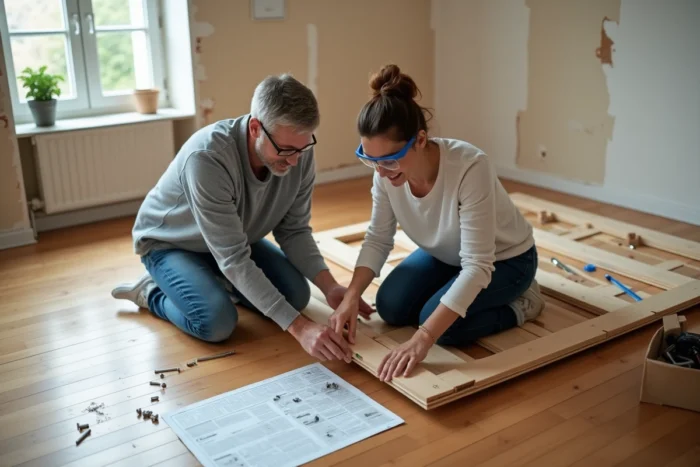
Painting and finishes: the mistakes that ruin a polished project
Painting concentrates a disproportionate share of disappointments in DIY. The wall is well-prepared, the color matches the sample, and yet the result is disappointing. Two causes consistently arise.
The first is application on a poorly prepared surface. A wall that has not been washed, lightly sanded, and dusted before applying the primer will not hold paint evenly. The primer is the only guarantee of a uniform finish, regardless of the price of the topcoat paint.
The second cause is the application equipment. A low-quality roller leaves marks, loses its fibers in the paint, and absorbs too much product. A short-pile roller (for smooth walls) or a medium-pile roller (for slightly textured surfaces) applied in cross passes gives a clean result without excess thickness.
For woodwork and baseboards, a decent-quality trim brush does more for the cleanliness of the line than an hour of poorly applied masking tape. Painter’s tape remains useful on glass surfaces or switches, but on a wall-baseboard corner, a hand guided by a good brush offers a cleaner result.
Ultimately, every home DIY project relies on a balance between preparation, appropriate tools, and mastered techniques. The DIY market today offers solutions that facilitate each of these steps, from supply platforms to practical workshops. The key is to choose the right tools for each situation rather than accumulating superficial tips.