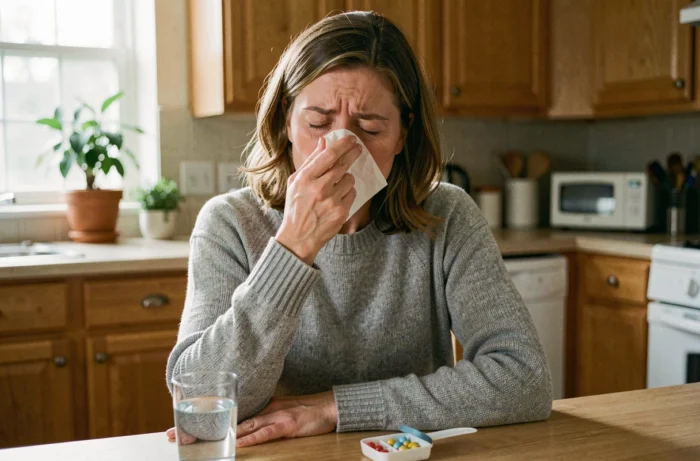
Common diseases do not form a homogeneous block. Between a seasonal flu that strains emergency services for three months and a sexually transmitted infection whose progression goes unnoticed, the epidemiological dynamics, prevention methods, and warning signals differ radically. Comparing these pathologies in terms of their recent impact in France allows us to identify where to focus attention.
Seasonal flu and bacterial STIs: two dynamics to distinguish
The 2024-2025 flu season has been described as particularly intense in metropolitan France, with nearly 3 million consultations for flu-like syndrome and about 29,000 hospitalizations after visits to the emergency room. The estimated excess mortality over the 12 weeks of the epidemic reaches approximately 17,600 deaths from all causes combined. Three strains circulated simultaneously: A(H1N1)pdm09, A(H3N2), and B/Victoria.
On the side of bacterial STIs, the trend is different in its timing but equally pronounced. Chlamydia, gonorrhea, and syphilis infections have been on the rise since 2021, with increases of up to +45% for gonorrhea during the period from 2021 to 2024. This rise mainly affects young adults and remains largely underdiagnosed.
To delve deeper into each pathology and its specifics, information available on Just Healthy details the mechanisms and management options.
| Criterion | Seasonal Flu (2024-2025) | Bacterial STIs (2021-2024) |
|---|---|---|
| Consultations / detected cases | About 3 million consultations | Increase up to +45% (gonorrhea) |
| Hospitalizations | About 29,000 | Rarely hospitalized, but complications possible |
| Excess mortality / severity | About 17,600 excess deaths | Infertility, neonatal transmission if untreated |
| Most affected population | Older adults, immunocompromised | Young adults (18-30 years) |
| Main prevention | Annual vaccination | Condoms, regular screening |

Flu symptoms and STI signs: common confusions
A flu-like syndrome is recognized by a sudden onset of fever, body aches, and intense fatigue. A dry cough and headaches complete the picture. These symptoms appear within hours and last for one to two weeks.
Bacterial STIs present a different problem: their symptoms are often subtle or absent. A chlamydia infection can remain silent for weeks. Gonorrhea sometimes causes burning during urination or discharge, but not systematically. Syphilis begins with a painless sore that disappears spontaneously, giving a false impression of healing.
This asymmetry partly explains the rise in STIs. While the flu prompts quick consultation (fever and pain are strong signals), an asymptomatic STI does not trigger any alerts. Screening then becomes the only detection net.
Signals that should lead to STI screening
- Burning during urination or unusual discharge, even mild and transient, after unprotected intercourse
- Appearance of a painless skin or mucosal lesion in the genital, anal, or oral area (possible sign of primary syphilis)
- Unprotected sexual intercourse with a new partner, even in the absence of any symptoms, as systematic screening remains the most reliable method
Prevention of common diseases: vaccination and screening do not cover the same risks
The flu vaccine targets a virus that mutates every year. Its effectiveness varies from season to season, but it remains the main lever to reduce severe forms in at-risk individuals. The 2024-2025 season, with the co-circulation of three strains, illustrates the complexity of this approach: the vaccine must anticipate the dominant strains several months before the epidemic.
For STIs, no vaccine covers the three major bacterial infections (chlamydia, gonorrhea, syphilis). HIV has preventive treatments (PrEP), but the prevention of bacterial STIs relies on two pillars: condoms and regular screening. In contrast, the hepatitis B vaccine and the human papillomavirus (HPV) vaccine protect against sexually transmitted viral infections, which sometimes creates confusion about the scope covered by vaccination.

Two complementary prevention logics
The flu falls under collective and seasonal prevention: vaccination campaigns in the fall, barrier gestures during the epidemic period. STIs fall under individual and continuous prevention, linked to sexual behaviors and access to screening.
STI screening is not a one-time act but a regular process, recommended at least once a year for individuals with multiple partners. This frequency remains insufficiently respected, which fuels the rise of undiagnosed infections.
Emerging infectious diseases in France: dengue and legionellosis under surveillance
Beyond the flu and STIs, two pathologies deserve particular attention. Dengue is under enhanced surveillance in metropolitan France with reported indigenous cases in recent years, linked to the presence of the tiger mosquito. Legionellosis, on the other hand, remains a serious bacterial infection transmitted by inhalation of contaminated water droplets, with cases regularly reported according to Public Health France.
These diseases do not fall under classic behavioral prevention (vaccination, condoms) but under environmental surveillance: vector control for dengue, maintenance of water networks for legionellosis. Their prevention relies more on public policies than on individual actions.
- Dengue: elimination of stagnant water, wearing long clothing in at-risk areas, skin repellents during the circulation of the tiger mosquito
- Legionellosis: control of hot water network temperatures, maintenance of cooling towers, rapid reporting of clustered cases
- Imported arboviruses (chikungunya, Zika): monitoring travelers returning from endemic areas and mandatory reporting
The distribution of prevention efforts between individual actions and collective policies varies according to the pathology. For flu and STIs, individual action (vaccination, condoms, screening) remains the primary lever. For vector-borne and environmental diseases, it is the institutional response that makes the difference. Keeping this distinction in mind helps better target one’s own protective measures.