
A sofa that floats in a room that’s too large, curtains that stop ten centimeters too high, a bookshelf that doesn’t fit into the wall recess: these discrepancies between standard furniture and the reality of our interiors are common. Custom decoration addresses this issue by starting from the space as it exists, with its constraints, volumes, and light, to create a layout that corresponds exactly to it.
Starting from the existing measurements before choosing a style
The first step in custom decoration is not glamorous. It involves measuring, observing, and inventorying what is already there. Ceiling height, window orientation, outlet positions, floor type: this data conditions everything else.
A north-facing living room is not treated like a room bathed in southern light. Warm tones (terracotta, ochre, linen) compensate for the lack of natural brightness, while a very well-lit space can support cooler colors or strong contrasts. The choice of colors stems from the light, not from current trends.
This survey also helps to identify hidden assets. An exposed beam, a stone wall, a recess under the stairs: these are elements that standard furniture ignores, but a layout designed for the room can transform them into focal points. Professionals like Zam Création D’Intérieurs work precisely from this reading of the space to propose solutions tailored to each configuration.
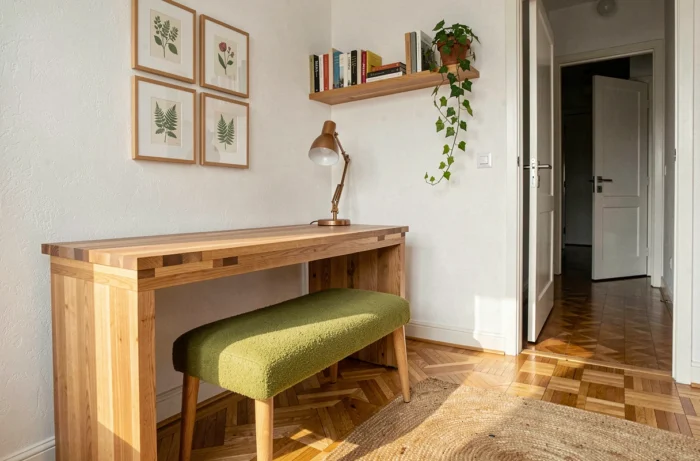
Custom decoration and reuse: what the regulations change
You may have noticed that furniture catalogs now highlight recycled materials or “eco-friendly” finishes? This shift is not just marketing.
In France, the AGEC law encourages renovation projects to integrate the inventory of existing items before any new purchase. In practical terms, this means refurbishing, transforming existing furniture, and adding new items only when necessary. Custom solutions are now aligned with an anti-waste logic.
At the European level, the ESPR regulation, which came into effect on July 18, 2024, places furniture among the priority product groups of its work plan. Manufacturers will gradually need to document the composition of their products, their reparability, and recycling pathways through a digital product passport.
What this changes for a decoration project
Choosing custom furniture from a local artisan often means having precise information about the source of the wood, the type of finish, and the durability of the assembly. A locally made piece offers traceability that industrial ranges struggle to guarantee.
A carpenter can also take an existing piece of furniture and adapt it for a new use. Transforming a dresser into a sink cabinet, resizing a wardrobe to fit into a recess, or changing the fronts of a kitchen without replacing the boxes: these interventions reduce waste while producing a unique result.
Materials and textures: building a sensory coherence
Custom decoration is not limited to dimensions. It also concerns the choice of materials and how they interact within the same room.
A simple principle guides experienced decorators: mix textures by contrast, but limit the color palette. For example, combining raw wood, linen, and black metal in a living room creates visual richness without overloading the space. The three materials differ in touch and appearance, but remain within a range of neutral tones.
- Solid wood (oak, walnut, beech) adds warmth and ages beautifully, enhancing the character of the room over time.
- Natural textiles (linen, washed cotton, boucle wool) soften the straight lines of furniture and absorb sound, improving acoustic comfort.
- Metals (steel, brass, wrought iron) structure the decor with their clean lines and create points of light when polished or brushed.
A common mistake is to multiply materials without a unifying thread. Five different materials in a four-square-meter bathroom create a cluttered effect, not sophistication. Two or three well-chosen materials are sufficient for a modest-sized room.
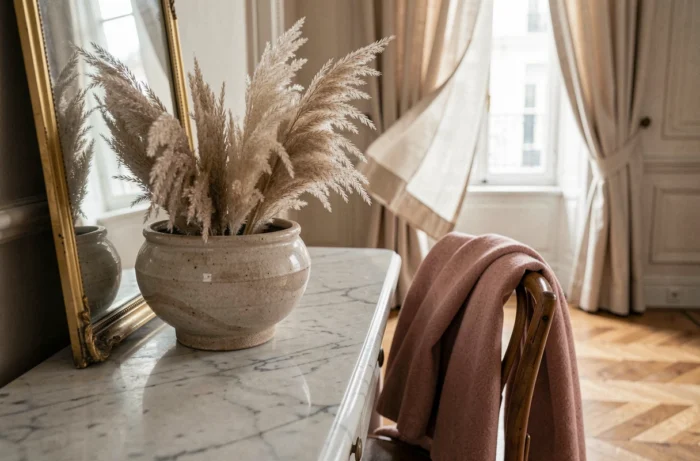
Adapting custom solutions to each room: living room, kitchen, bedroom
Not all rooms require the same degree of customization. Custom solutions make the most sense where usage constraints are strongest.
The kitchen, a technical playground
This is the room where the gap between standard and custom is most felt. A countertop tailored to the user’s size, storage designed for the actual equipment owned, lighting positioned above work areas: these adjustments transform daily life.
The choice of material for the countertop (solid wood, natural stone, ceramic) depends on the desired balance between aesthetics and maintenance. Wood requires regular treatment but ages with character. Ceramic resists heat and stains, offering a more contemporary finish.
The living room, a space of volume
Here, custom solutions often involve wall storage and art. A bookshelf designed to fit an entire wall, with niches for artworks and integrated lighting, creates a very different effect than a piece of furniture placed against the wall. Custom wall storage frees up floor space and visually structures the room.
The bedroom, a space of comfort
Custom closets remain the most common request. Beyond saving space, they allow for the distribution of storage areas according to actual habits: appropriate hanging height, drawers sized for accessories, adjustable shelves.
- Including interior lighting in the closet makes choosing clothes easier and avoids dependence on the ceiling light.
- Integrating a full-length mirror on one of the doors saves wall space in the bedroom.
- Opting for sliding doors rather than hinged ones when space is tight.
Custom decoration works like a tailored garment: it starts from actual measurements to produce a result that feels natural. What distinguishes it from standard furniture is less a matter of budget than of method. Taking the time to assess the existing situation, choosing coherent materials, respecting the proportions of each room: these simple steps radically change the relationship with one’s interior.