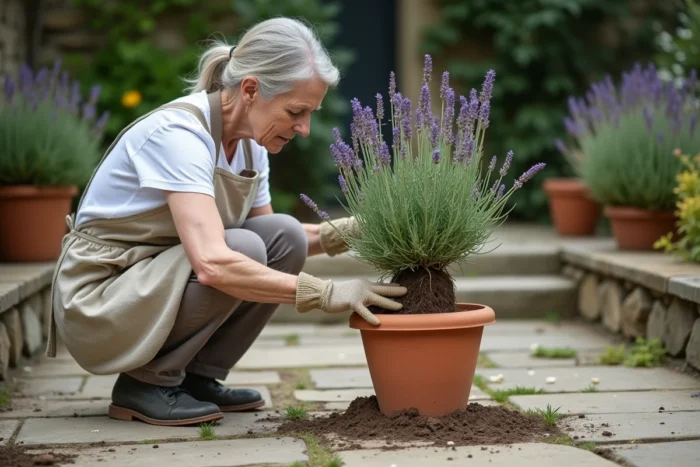
A lavender that is wilting in well-drained soil, watered sparingly, pruned after flowering: this scenario is puzzling. Yet we regularly observe this situation among gardeners who apply the right practices but in an unsuitable context. The problem almost never stems from a lack of care. It arises from an excess of poorly calibrated care or from an environmental parameter that standard cultivation sheets do not mention.
Clay soil and lavender: drainage is not always enough
Clay soil retains water deep down, even when the surface seems dry. Adding gravel to the bottom of the planting hole, as most guides recommend, only solves part of the problem. Clay forms an impermeable basin around the roots, and water stagnates precisely where lavender cannot tolerate it.
The real solution involves a structural modification of the soil over a much larger volume than the planting hole. We recommend mixing the original soil with coarse sand over at least three times the diameter of the root ball. Without this precaution, root rot can set in within a few months, often as early as the first wet winter.
If you are trying to understand why your lavender in poor condition what to do remains a recurring question, it is often because the diagnosis stops at watering without examining the nature of the soil in depth.
A simple test: dig with a spade next to the plant. If the soil sticks to the blade and retains the shape of the hole, your soil is too compact for lavender without serious amendment.
Organic mulching around lavender: a common mistake in humid climates
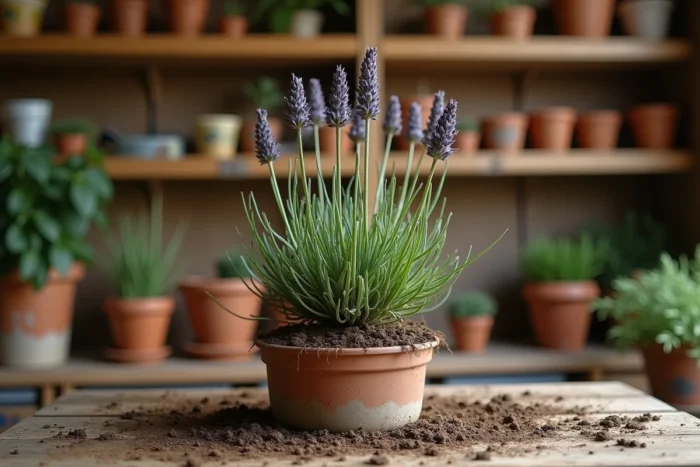
Organic mulching (bark, straw, wood chips) is a reflex of conscientious gardeners. Around lavender, it can accelerate its decline. The decomposing organic matter maintains a constant moisture level at the collar, the most vulnerable area of the plant.
We regularly observe lavenders whose base darkens and softens while the rest of the foliage appears healthy. The culprit is almost always mulch that is too thick, placed in direct contact with the stems. Lavender is a garrigue plant: it thrives in mineral, warm soil where water evaporates quickly.
The corrective action is radical: remove all organic mulch within a sufficient radius around the plant. If mulching is still desirable to limit weeding, opt for mineral mulch (gravel, pumice, crushed slate) that warms the soil and keeps the collar dry.
Signs to watch for after removing the mulch
- A darkening that stops progressing in the following weeks indicates that the mulch was indeed the issue.
- Soft, brown superficial roots signal that rot is already present, requiring a rescue pruning of the affected parts.
- A resumption of growth in the following spring confirms that the plant has been able to heal, provided that no organic matter is placed back at the base.
Potted lavender and urban balcony: the summer watering trap
In pots, lavender suffers from a thermal paradox. The substrate overheats in full sun, and the watering creates a cooking effect on the roots in a confined environment. Watering potted lavender in full heat can kill it faster than drought.
The natural reflex when facing a lavender that seems to wilt in summer is to increase watering. It is precisely the opposite that should be done. Lavender can withstand prolonged periods of drought. In pots, watering every ten to fifteen days is sufficient in summer, provided it is done early in the morning or in the evening, never in full sun.
Substrate and container: two underestimated parameters
A black plastic pot accumulates heat and retains moisture. A terracotta pot, even if heavier, allows for lateral evaporation that regulates the substrate temperature. The choice of container radically changes the plant’s survival.
The substrate must be poor and very draining: a mix of light potting soil with one-third coarse sand or perlite. An enriched universal potting soil, too rich in organic matter, promotes fungal development at the expense of the roots.
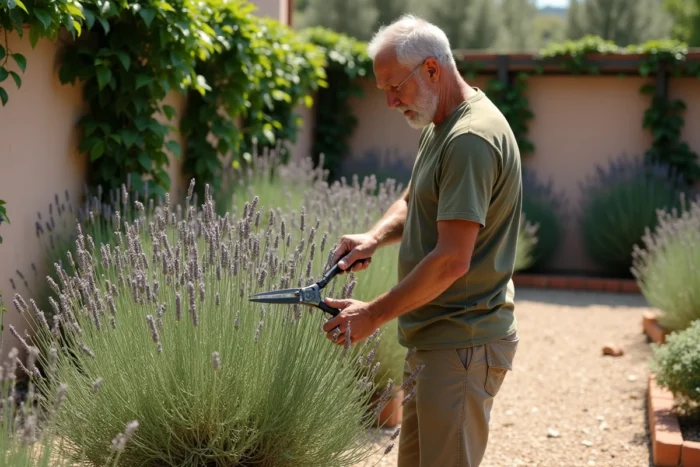
Pruning lavender: cutting into old wood destroys the clump
Lavender does not regrow from old wood. This is a botanical rule that many gardeners discover too late. Pruning below the green foliage zone, into the woody and gray stems, permanently condemns the cut part.
The correct pruning is done just after flowering, removing the flower spikes and the upper third of the green foliage. This intervention maintains a compact shape and prevents the gradual bare center of the clump.
- Pruning each year after flowering prevents the plant from becoming excessively woody at the base.
- Never cut below the last crown of green leaves, even if the clump seems too tall.
- A lavender plant that has not been pruned for several years will inevitably become bare in the center, and no corrective pruning can reverse this process.
Natural aging occurs after five to eight years depending on the varieties. At this stage, replacing the plant by cuttings remains the most effective solution rather than persisting with an exhausted clump.
Lavender forgives neglect much better than excess attention. Poor soil, rare watering, mineral mulching, and light annual pruning form the foundation of a sustainable plant. When a plant is wilting despite seemingly correct care, the answer is almost always found in a contextual detail (nature of the soil, type of pot, material of the mulch) rather than in an additional action to take.