
Heating represents the largest energy expense for French households. Reducing heating bills requires understanding which levers produce a measurable effect and which are merely symbolic gestures. Aid programs are evolving rapidly, rules on fossil fuels are tightening, and the housing stock remains largely poorly insulated. Here’s what recent data allows us to affirm.
Energy renovation: the regulatory framework changes the game
Since 2024, public aid for renovation (MaPrimeRénov’, CEE bonuses) has been refocused on decarbonized heating equipment: heat pumps, high-performance biomass, and connections to renewable heat networks. Major renovations in individual homes must now result in a system without gas or oil to be fully funded.
This refocusing changes the investment logic. A household that was considering replacing its old gas boiler with a newer model now faces a different calculation: financial aid is directing them towards heat pumps or pellet stoves. Field feedback on this transition varies depending on the type of housing and climate zone, but the direction taken by public authorities is clear.
At the same time, a decree in effect since July 1, 2022, prohibits the installation of new oil boilers exceeding a certain greenhouse gas emissions threshold. Maintenance and repair of existing equipment remain permitted. To stay updated on industry news and available aid, the Mon Chauffage Économique website compiles regulatory developments by type of equipment.
Thermal insulation: where to focus the budget for real impact
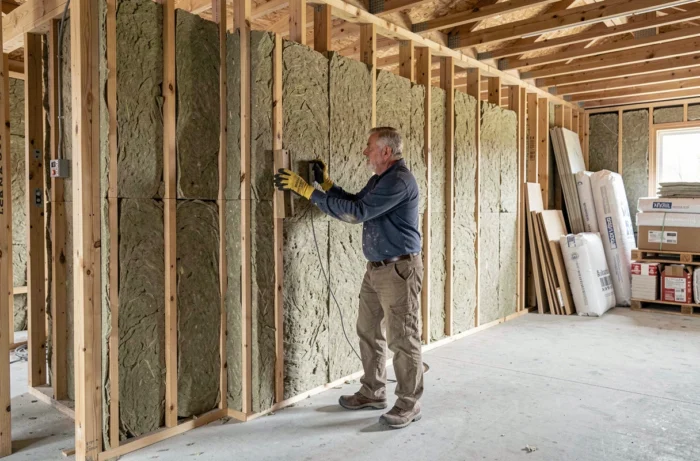
Lowering the thermostat by one degree or closing shutters at night produces a real but limited effect. Insulation remains the lever that structurally reduces consumption, as it addresses thermal losses from the building, not just the behavior of the occupant.
Not all insulation measures are equal. Priorities depend on the diagnosis, but certain projects consistently appear in energy audits:
- Insulating lost attics or the roof, responsible for the largest share of losses in an individual home, generally offers the best return on investment.
- External wall insulation eliminates thermal bridges, but its cost is significantly higher, and the payback time is extended.
- Replacing single-glazed windows with high-performance double glazing improves perceived comfort, even if the pure savings on the bill remain moderate compared to attics.
A often-overlooked point: ventilation. Insulating without adapting the mechanical ventilation system can generate humidity and air quality issues. Effective insulation requires properly sized ventilation.
Programmable thermostat and room-by-room regulation: real gains and limits
Installing a programmable thermostat is one of the most recommended actions. The principle is simple: adjust the set temperature to the occupancy times of the home to avoid heating at full capacity when no one is present.
Connected thermostats add a layer of optimization. Some models incorporate local weather and learn the household’s habits. However, the gain heavily depends on the difference between the old setting and the new one. A household that was already heating to 19 °C with manual programming will see only a marginal difference.
Room-by-room regulation, made possible by thermostatic radiator valves (TRV) on water radiators or control modules on electric radiators, allows not heating bedrooms like the living room. It’s a modest investment that produces a measurable effect, provided the hydraulic installation is properly balanced.
What field feedback shows
The available data does not allow for a universal percentage of savings related to the thermostat. Manufacturers announce optimistic figures, while independent studies are more cautious. The gap is explained by the diversity of housing, climates, and behaviors. What is documented is that hourly programming combined with a reasonable set temperature produces a tangible effect on the bill.

Heat pump or biomass boiler: decide based on your housing
Replacing the heating system is the most expensive lever, but also the one that sustainably transforms the energy profile of the home. Two sectors currently concentrate most of the aid and installations.
The air-to-water heat pump is well-suited for homes that already have a water radiator circuit or underfloor heating. Its efficiency decreases in very cold weather, raising the question of supplementary heating in the harshest climate zones. Field feedback varies on this point: some installers oversize the equipment, while others plan for electric backup.
The wood pellet boiler (biomass) offers an alternative in areas where wood energy is accessible at a stable cost. It requires storage space for the silo and regular maintenance. The choice between heat pump and biomass depends on the existing building, local climate, and available budget.
In both cases, using a certified RGE (Recognized Guarantor of the Environment) installer is a prerequisite for accessing public aid. This criterion is non-negotiable: without RGE certification, no MaPrimeRénov’, no CEE bonus, no zero-interest eco-loan.
The heating bill cannot be reduced with a single action. Insulation addresses the cause, regulation optimizes usage, and equipment change modifies the energy equation in the long term. These three axes work together. A programmable thermostat in a thermal sieve will not work miracles, just as a high-performance heat pump in poorly insulated housing will run at full capacity. The order in which work is undertaken is as important as the work itself.