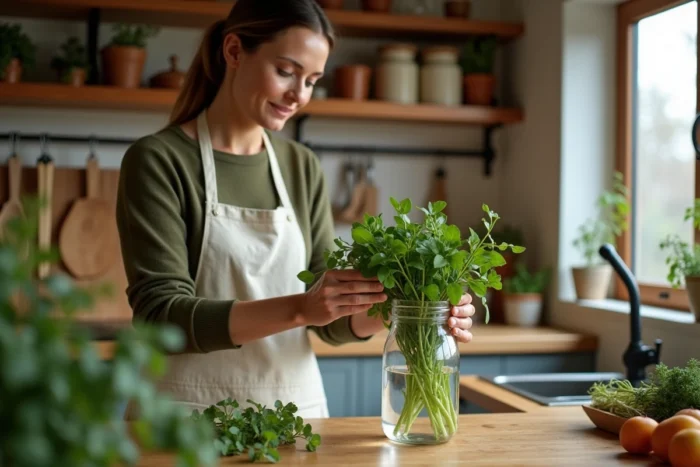
Purslane (Portulaca oleracea) loses its turgor within a few hours at room temperature. Keeping this succulent plant throughout the winter requires managing residual moisture, thermal shock during blanching, and seed management to restart the crop in spring. Here we detail the techniques that truly preserve the qualities of purslane for several months.
Residual moisture and degradation of purslane after harvest
Water trapped between the fleshy leaves is the primary factor for rotting. The succulent stems of purslane naturally retain a lot of water in their tissues. After harvest, this water migrates to the surface and creates a film conducive to mold as soon as air circulation is insufficient.
A closed plastic bag accelerates this phenomenon within hours. We recommend drying the washed leaves in a clean cloth, then laying them out in a single layer on absorbent paper for about twenty minutes before any packaging. This gentle drying makes the difference between purslane that lasts a few days in the refrigerator and purslane that turns black the very next day.
For short-term storage in the refrigerator, wrap the stems in a slightly damp cloth (not wet) and place them in a ventilated container. You can find tips for preserving purslane that confirm this approach. The duration remains limited to a few days, making it a stopgap solution, not a wintering method.
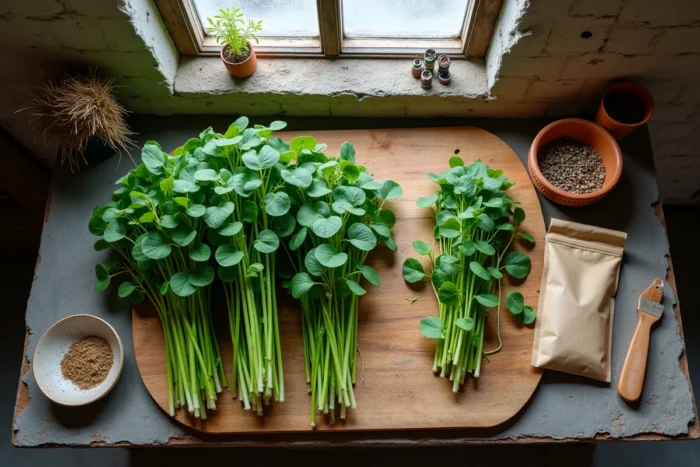
Blanching and freezing purslane for winter
Directly freezing raw leaves yields poor results: the succulent cells burst upon thawing and release all their water, leaving a mushy texture and bland taste. Quick blanching before freezing is the only reliable method for long-term preservation.
Blanching protocol suitable for purslane
Immerse the stems and leaves in boiling water for about thirty seconds, no longer. Purslane is not a dense vegetable like broccoli: over-blanching destroys its texture and nutrients.
- Immediately transfer the leaves to an ice water bath to stop the cooking. This thermal shock sets the green color and limits oxidation.
- Drain thoroughly, then gently press the leaves in a cloth to extract as much water as possible before packaging.
- Spread in flat portions in freezer bags, removing the air. Thin portions freeze faster and thaw more evenly.
Blanched and then frozen purslane is intended exclusively for cooked dishes: soups, stir-fries, casseroles. The crunchy freshness of a raw salad is not retained after thawing, and claiming otherwise would be misleading.
Preserving purslane in jars through lactofermentation
Competitors talk about airtight jars without always specifying the process. A simple closed jar with fresh purslane inside preserves nothing at all: it creates an anaerobic environment conducive to botulism if no acid or salt controls the pH.
Lactofermentation offers an interesting alternative. Pack the clean leaves and stems into a glass jar with a salt-brined solution. The salt extracts water from the tissues and creates an acidic environment hostile to pathogens. Fermented purslane develops a tangy flavor different from the fresh product, but it retains some of its nutritional qualities and can be kept for several months in a cool place.
This method requires precision: the leaves must remain submerged under the brine, and the jar must be vented daily in the first few days to release the carbon dioxide produced by fermentation. Poorly packed or partially emerged purslane will mold.
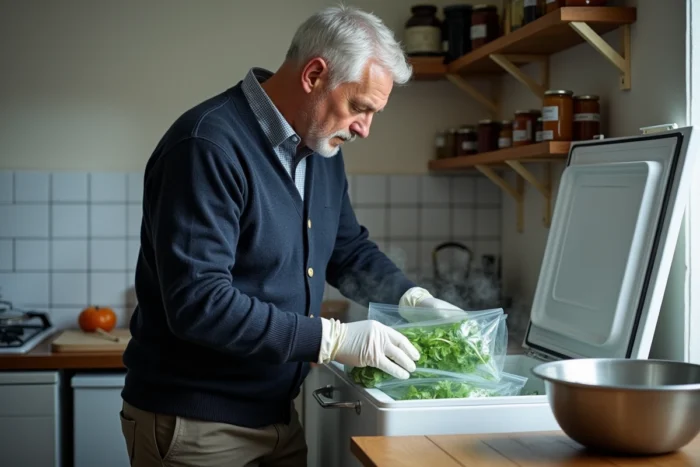
Purslane seeds: the real wintering strategy for the vegetable garden
Trying to keep live Portulaca oleracea plants all winter is a lost cause in most European climate zones. Purslane is an annual that dies at the first frost. The most relevant strategy is to let a few plants go to seed at the end of the season.
Harvesting and storing seeds
Leave two or three plants to flower and form their capsules without harvesting them. The capsules open naturally at maturity. Collect them just before they fully open, when they start to yellow, by cutting the entire stem above a container.
- Dry the capsules in the shade for a few days in a ventilated area, away from direct sunlight.
- Separate the seeds from the plant debris by shaking the dry capsules over a sheet of paper.
- Store in a paper envelope (not plastic) in a dry, cool, and dark place. Purslane seeds retain their germination power for several years under these conditions.
Spontaneous reseeding also works very well if your soil is well-drained. Let a few capsules open naturally in the vegetable garden: the seeds will overwinter in the soil and germinate as soon as the warmth returns in spring. A light mulch over the area protects the seeds from heavy rains and runoff without blocking germination.
Winter purslane: a distinct alternative
Cuban claytonia (Claytonia perfoliata), sometimes called “winter purslane,” is a completely different species from Portulaca oleracea. It tolerates cold and produces edible leaves from fall to spring. If you want fresh leaves in winter without resorting to freezing, this is the species to turn to, sowing it as early as late summer in cool, shaded soil.
Therefore, preserving summer purslane throughout the winter relies on two complementary axes: transforming the harvest (freezing after blanching, lactofermentation) and preparing for the next season through seed management. Refrigeration storage methods only cover a few days and do not provide a winter solution. Relying on seeds remains the most economical and reliable approach for the vegetable garden.