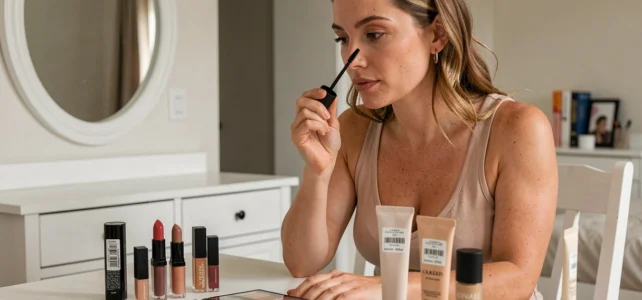
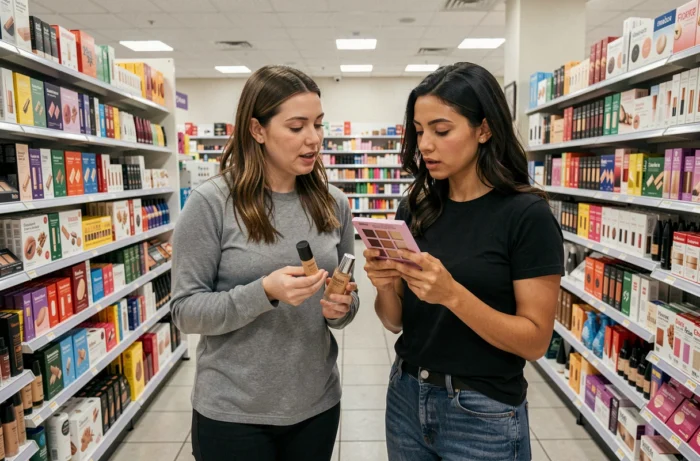
We’ve all experienced that moment in a drugstore or supermarket: hesitating between a foundation that costs a few euros and another that is four times more expensive, unsure if the difference is really justified. Cheap makeup evokes as much enthusiasm as skepticism among consumers who refuse to compromise on wear, comfort, or composition. Analyzing what distinguishes a good deal from a disappointing purchase requires looking beyond the displayed price.
Composition of cheap cosmetics: what has changed since 2026
Before even discussing pigmentation or wear, the question of formulation deserves attention. Since 2026, French law has banned PFAS in cosmetics. These per- and polyfluoroalkyl substances were used as a waterproof film in waterproof mascaras, long-wear foundations, and ultra-resistant lipsticks, including in the cheapest ranges.
In practice, many long-wear products have been reformulated or removed without brands always communicating clearly. Sometimes you find yourself facing identical packaging but a different texture, less film-forming, which comes off more easily during makeup removal. Some consumers perceive this change as a loss of performance. Others see it as progress for the skin.
At the same time, a controversial UV filter (4-MBC) has been completely banned from the European Union since May 2026. Makeup products that include SPF, even at low prices, can no longer contain it. For those consulting cheap makeup reviews from private beauty, these regulatory changes alter the perspective: a recently reformulated product will not have the same feedback as an old stock.
Wear and pigmentation: field tests on three categories of products
No matter how much we read product descriptions, it’s how they perform when worn that matters. Three families of makeup concentrate the bulk of disappointments (and pleasant surprises) among buyers of low-cost cosmetics.
Foundations and primers
Foundation remains the most scrutinized product. In ranges under ten euros, coverage is rarely the issue. What falls short is wear beyond six hours and performance on combination to oily skin. Reformulated post-PFAS formulas tend to slide more in the T-zone.
A tip that often comes up in user feedback: apply a mattifying primer before cheap foundation rather than investing in a high-end foundation alone. The longevity results are comparable, for a total budget that remains moderate.
Waterproof mascara and eyeliner
This is the category where reformulation is most noticeable. Cheap waterproof mascaras from before 2026 sometimes performed better than certain premium products. Since the ban on PFAS, feedback on this point varies: some references maintain decent wear in the rain or at the gym, while others flake by the end of the day.
Checking the manufacturing date on the packaging allows you to know if you’re buying an old formula (residual stock) or a reformulated version. This detail radically changes the experience.
Lipsticks and glosses
Liquid matte lipsticks at low prices remain one of the best value-for-money options in cheap makeup. The pigmentation often rivals much more expensive brands. The recurring weak point: comfort after several hours, with a more pronounced drying effect than on formulas enriched with vegetable oils from mid-range lines.
Common pitfalls on low-cost makeup sales sites
Buying cheap makeup online exposes consumers to specific pitfalls that discerning buyers quickly identify.
- Short expiration dates: clearance sites regularly offer products nearing their minimum durability date. A mascara at half price that dries out in three weeks is not a bargain.
- Shades not matching visuals: online photos, especially on private sales platforms, do not always reflect the actual shade. Reviews with worn photos remain the most reliable source for evaluating a beauty product.
- Counterfeits on marketplaces: brands like Kiko, NYX, or Maybelline are frequently counterfeited on third-party marketplaces. Buying through the brand’s official site or an authorized retailer remains the only guarantee of receiving the genuine product.
- Shipping costs that negate the discount: a product priced at three euros with five euros shipping is not cheap makeup; it’s makeup at the normal price with an illusion of promotion.
Reading consumer reviews: filtering out the noise to keep the useful
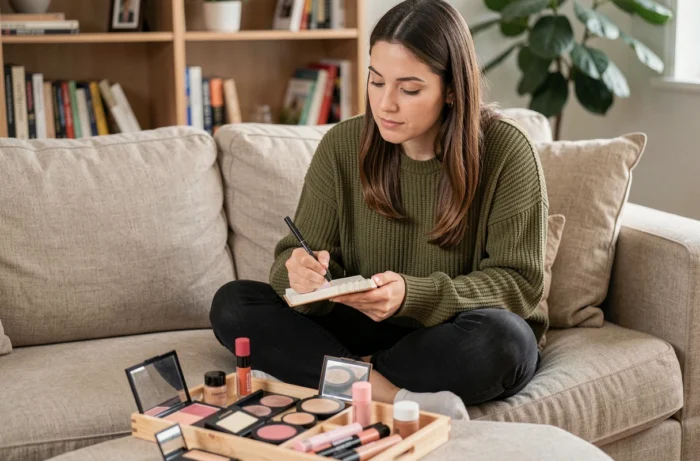
Online experience feedback is the primary resource for buyers of low-cost makeup. But not all reviews are created equal. A comment that describes skin type, wearing conditions (heat, humidity, duration), and compares with a known product provides much more than a five-star rating without context.
Specialized beauty platforms often allow filtering reviews by skin type or shade. This is a significant time saver compared to general reviews on large marketplaces. It’s also easier to spot sponsored feedback, which consistently praises the brand without any nuance.
A useful review describes a concrete problem and how it was resolved (or not). This level of detail truly helps make an informed choice among dozens of similarly priced options.
Cheap makeup has never offered so many reliable options, but vigilance regarding composition, distribution channels, and critical reading of reviews remains the best filter. With ongoing reformulations, testing a product for a few days before stocking up remains the safest method, regardless of the budget.